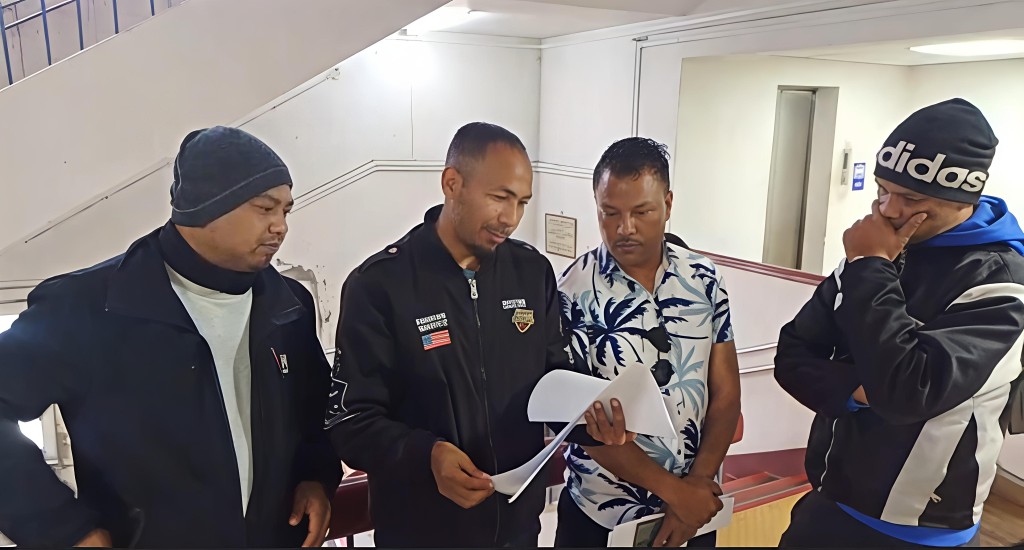
Shillong : The Hynniewtrep Integrated Territorial Organisation (HITO) has urged the state’s Chief Electoral Officer B. D. R. Tiwari to review Meghalaya’s electoral rolls, citing concerns over the alleged inclusion of unauthorized foreigners in voter lists.
In a letter submitted on Friday, HITO president Donbok Dkhar referred to a 1985 petition by late Prof. M.N. Majaw and stressed the need to apply the principles of the Memorandum of Settlement Accord to address the issue.
The organization submitted several recommendations aimed at safeguarding the integrity of Meghalaya’s electoral process.
Among its suggestions, HITO called for stricter enrolment requirements and urged authorities not to accept Aadhaar cards as the sole proof of identity.
“This system may inadvertently facilitate misuse, allowing individuals without legitimate residency status to obtain electoral enrolment,” Dkhar warned.
The group also advocated recognizing local verification documents such as certificates issued by village Dorbars, Syiem, Nokma, and clan authorities as valid proof of identity and residency.
“These documents provide robust verification of an individual’s deep-rooted connection to the community,” the organization stated.
HITO further recommended implementing a cut-off year based on the 1985 Memorandum of Settlement Accord to help preserve the state’s cultural and demographic integrity.
“We advocate establishing the principles of the Accord to protect and preserve the rich cultural heritage, unique languages, distinct customs, and traditional ways of life of the Khasi, Jaintia, and Garo peoples,” Dkhar said.
Highlighting Meghalaya’s geographical vulnerability, the organization noted the state’s proximity to the India–Bangladesh border, stretching approximately 443 km, which it said heightens the risk of unauthorized foreign nationals enrolling in electoral rolls.
HITO also raised concerns about the ease of obtaining Aadhaar cards, citing media reports that suggest potential misuse.
The organization reiterated that the creation of Meghalaya in 1972 was a historic milestone aimed at safeguarding indigenous identity and ensuring the preservation of its cultural heritage.
It expressed hope that the recommendations would contribute constructively to strengthening the integrity of the electoral process while protecting the rights and identity of indigenous communities.