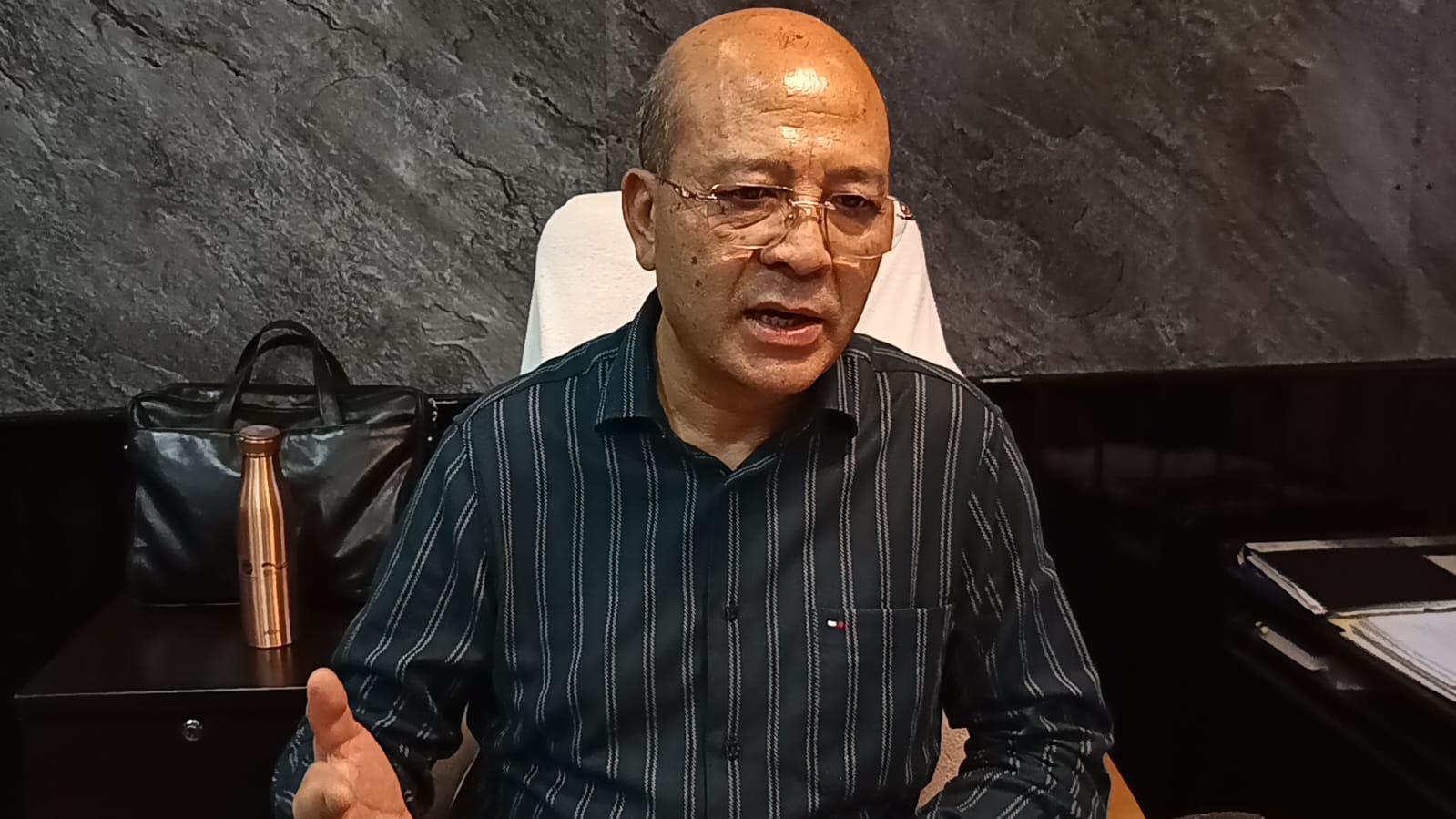
SHILLONG : The United Democratic Party (UDP) has officially accepted the resignation of Robertjune Kharjahrin, the Regional Democratic Alliance (RDA) candidate in the 2024 Lok Sabha elections, with party president Metbah Lyngdoh asserting that there is no division or internal conflict within the party.
Speaking to reporters on Friday, Lyngdoh said the party had received Kharjahrin’s resignation letter and decided to respect his decision.
“Everyone has the freedom to think and decide in their own way. We have received his resignation letter and, from the party’s side, we have nothing more to say. We respect the decision taken by him and have accepted his resignation,” Lyngdoh stated.
While declining to elaborate on the reasons mentioned in the resignation letter, the UDP chief emphasized that the development should not be interpreted as a sign of disunity within the party.
“There is no division in the party. Since we have received his resignation letter, I do not see any differences or issues that suggest a split within the UDP,” he said.
Kharjahrin had contested the Shillong Lok Sabha seat in the 2024 general elections as the candidate of the Regional Democratic Alliance, backed by the UDP and other regional parties.
Responding to concerns raised by the UDP Shillong City District Unit, Lyngdoh said party members have every right to express their views and concerns through established internal platforms.
“There is always a mechanism within the party for dialogue, consultation and discussion regarding party affairs. Members are free to raise concerns through these channels,” he said.
On a letter from the Shillong City unit that had surfaced in the public domain, Lyngdoh described it as an internal matter that had already been resolved.
“The letter was leaked from some source, but we have sorted out the issue. I personally met the Shillong City unit, and everything has been settled,” he added.
The UDP leadership has maintained that the party remains united despite recent developments and that all concerns raised internally have been addressed through consultation and dialogue.