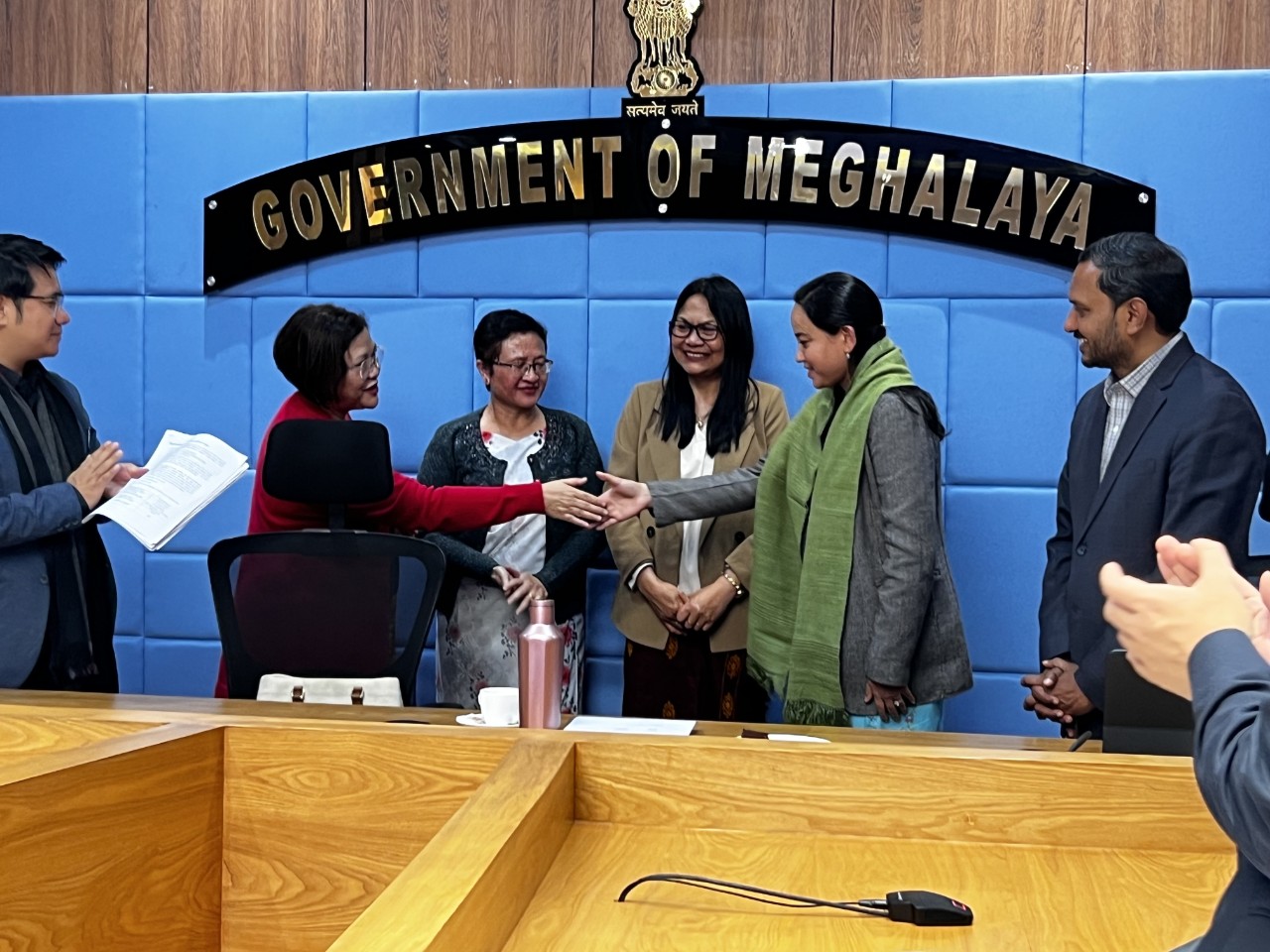
Shillong : A high-level review of Meghalaya’s health sector was conducted by Dr. Mehtab Chandee A. Sangma, Advisor to the Health & Family Welfare Department, Government of Meghalaya, at the Main Conference Hall of the Meghalaya Secretariat, with a strong focus on improving rural healthcare, nutrition, adolescent wellbeing, and specialist services.
The meeting was facilitated by Sampath Kumar, IAS, Additional Chief Secretary (Health & Family Welfare), and attended by senior officials including Joram Beda, IAS, Commissioner & Secretary; Richard Yanthan, IAS, Joint Secretary; and key departmental heads such as Dr. J.S. Momin, Dr. Neela E. Kharsahnoh, Dr. Lumrilyne Mylliemumlong, Paul V. Lyngdoh, and Dr. K. Lucia Iawbor, along with representatives from various health missions and agencies.
An overview of the department’s performance was presented by Sampath Kumar, highlighting flagship initiatives such as Mission 1000 Days, strengthening rural health infrastructure, and the launch of the Chief Minister’s Headman Fellowship. The presentation also flagged a critical concern — Meghalaya’s high stunting rate at 46%, calling for urgent and coordinated intervention.
During the review, updates on HIV prevalence were presented by the Meghalaya AIDS Control Society, emphasizing the need for sustained focus, early detection, and preventive strategies given the high-risk nature of the disease.
Dr. Sangma stressed that with nearly 80% of the state’s population residing in rural areas, there is an urgent need to strengthen healthcare delivery at the grassroots level. She highlighted the shortage of specialists in Primary Health Centres (PHCs) and Community Health Centres (CHCs), which often forces patients to travel long distances for treatment. She called for innovative deployment strategies and improved human resource management.
She also underlined the importance of creating supportive work environments for healthcare professionals, including better infrastructure, flexibility, and attention to personal and family needs, to enhance retention and efficiency.
A major focus of the discussion was on adolescent health, particularly through the Meghalaya Programme for Adolescents Wellbeing, Empowerment and Resilience (MPOWER). Dr. Sangma emphasized that targeted interventions are essential given the state’s large youth population, as these will significantly impact long-term health outcomes.
Addressing malnutrition, she pointed out key contributing factors such as poor dietary diversity, inadequate maternal nutrition, and low rates of exclusive breastfeeding. She stressed the need to strengthen awareness and improve child feeding practices to tackle stunting effectively.
Concerns were also raised regarding infant mortality, with Dr. Sangma calling for detailed analysis of infant deaths. She noted that early treatment of conditions like upper respiratory infections can prevent severe complications such as pneumonia, a leading cause of infant deaths.
The issue of anaemia among mothers and children was highlighted, with emphasis on early diagnosis and timely intervention. Additionally, Dr. Sangma expressed concern over the high incidence of teenage pregnancy in Meghalaya, linking it to school dropouts and social challenges, including cases under the POCSO Act. She stressed the need for awareness campaigns, improved access to contraception, and targeted outreach programmes.
The meeting also discussed the importance of strengthening public health systems through trained ASHA workers, improved malaria response, and community-level healthcare interventions.
Dr. Sangma appreciated the impact of the Meghalaya Health Insurance Scheme (MHIS), particularly in supporting rural populations, and called for increased awareness and wider coverage.
Key infrastructure and system improvements discussed included the upgradation of CHCs into First Referral Units (FRUs), expansion of Neonatal Intensive Care Unit (NICU) facilities to reduce infant mortality, solarisation of healthcare facilities, and strengthening medical supply chains through the Meghalayan Medical Drugs and Services Limited.
Commending the efforts of the Health Department and its partner institutions, Dr. Sangma reaffirmed her commitment to supporting initiatives that improve healthcare outcomes, especially for women, children, and vulnerable communities.
The meeting concluded with a strong commitment from all stakeholders to enhance service delivery, strengthen healthcare systems, and ensure last-mile access to quality healthcare across Meghalaya.