The Congress party has strongly condemned the Centre’s decision to replace the Mahatma Gandhi National Rural Employment Guarantee Act (MGNREGA) with the Viksit Bharat Guarantee for Rozgar and Ajeevika Mission (Gramin) (VB-G RAM G), describing the move as a direct attack on women’s dignity and economic independence.
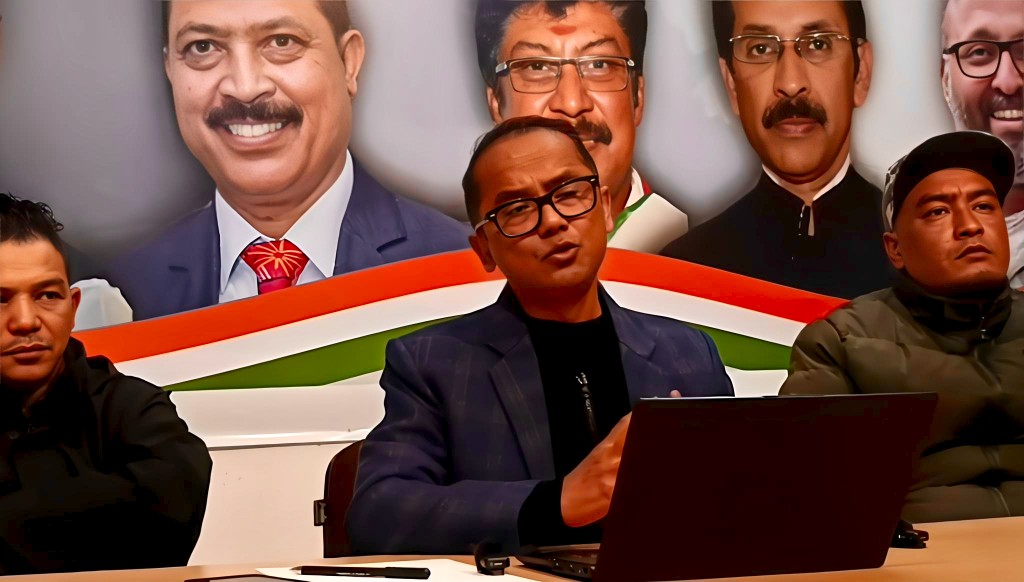
Addressing the media on Saturday, Chairman of the Congress Social Media Cell Langkupar War said the dismantling of MGNREGA has severely undermined a scheme that empowered rural women and ensured household security.
“The BJP has directly attacked the dignity of womenfolk by dismantling MGNREGA, a programme that provided economic independence and security to millions of women,” War said.
He highlighted that women constituted nearly 60 per cent of MGNREGA beneficiaries and accused the Centre of deliberately underfunding the scheme over the years. Citing budget figures, War said Rs 73,000 crore was allocated in 2021–22 against a requirement of Rs 98,000 crore, while in 2023–24, only Rs 60,000 crore was allocated despite the actual requirement exceeding Rs 1 lakh crore.
According to War, the replacement of MGNREGA marks a fundamental shift from a demand-driven employment guarantee to a supply-driven system, effectively removing the legal right to work for rural citizens.
He outlined four major changes introduced under the new framework: centralised notifications that make employment conditional, fixed budget allocations prioritising fiscal limits over people’s needs, increased financial burden on state governments, and the imposition of technological controls that exclude vulnerable workers.
War warned that these changes would have a disproportionate impact on rural regions, particularly in states like Meghalaya. “The new system will result in fewer workdays, delayed wage payments, and increased vulnerability among rural households,” he said.
The Congress leader asserted that the replacement of MGNREGA threatens rural livelihoods and called upon the Centre to reconsider the decision in the interest of women and marginalised communities.